
How to Get Your Website to the Top of Google Search Results
A practical, sustainable SEO roadmap for businesses that want more visibility, traffic and qualified leads
Every business wants to appear at the top of Google. That is where attention is highest, trust begins and customers are most likely to click. But top rankings do not come from adding a few keywords to a page or publishing one blog and waiting. They are earned by making your website the clearest, most useful and most trustworthy answer for the searches that matter to your customers.
For a local clinic, contractor, professional service company, retailer or growing brand, that means combining strong website structure, helpful content, local relevance, technical performance and real-world authority. Google’s own guidance is clear that there is no secret switch that automatically ranks a site first. SEO is an ongoing process of helping search engines understand your content while helping people decide that your business is the right choice.
The good news is that the process is not mysterious. When you focus on the right fundamentals and improve them consistently, your website can earn stronger visibility, attract better traffic and generate more calls, bookings and quote requests.
Important: No ethical SEO provider can guarantee a permanent number-one position. Rankings vary by query, location, device, competition and Google’s evolving systems. The goal is sustainable growth across the searches that drive business results.
What Does “The Top of Google” Actually Mean?
Google results are no longer a simple list of ten blue links. Depending on the search, a customer may see paid ads, a local map pack, organic listings, images, videos, products, featured answers and other search features. A strong strategy therefore aims to increase your presence across the results page, not chase one isolated ranking.
For most local businesses, success may include appearing in the map results, ranking service pages for high-intent searches, earning traffic from useful blogs and improving the percentage of searchers who call or submit a form. The best SEO work connects visibility to real outcomes—not vanity metrics alone.
1. Start With Search Intent, Not Just Keywords
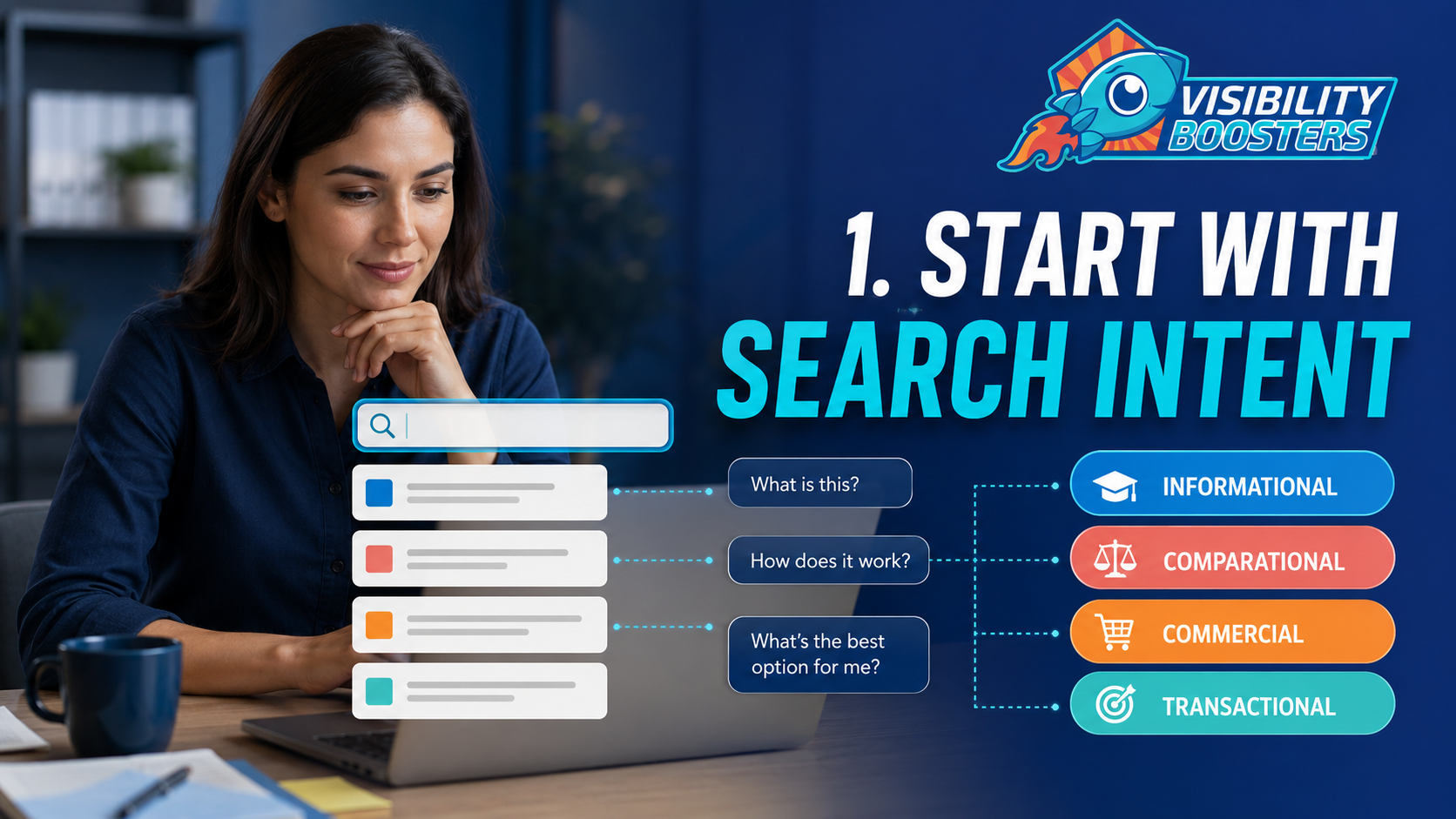
A keyword tells you what someone typed. Search intent tells you what that person is trying to accomplish. That difference should guide every important page on your website.
Someone searching “what causes a leaking basement” is usually researching a problem. Someone searching “basement waterproofing company in Niagara Falls” is much closer to hiring. Both searches may matter, but they need different pages and different answers.
Build a search-intent map
Informational searches: questions, symptoms, how-to topics and early-stage research.
Commercial searches: comparisons, costs, reviews, benefits and “best” options.
Transactional searches: book, call, buy, request a quote or schedule service.
Local searches: service plus city, region, neighborhood or “near me.”
Assign one clear purpose to each page. A service page should help a ready-to-act customer understand the service and take the next step. A blog should answer a focused question and naturally guide the reader to a relevant service. Trying to make every page rank for every variation usually creates vague, repetitive content.
2. Build a Strong Technical SEO Foundation
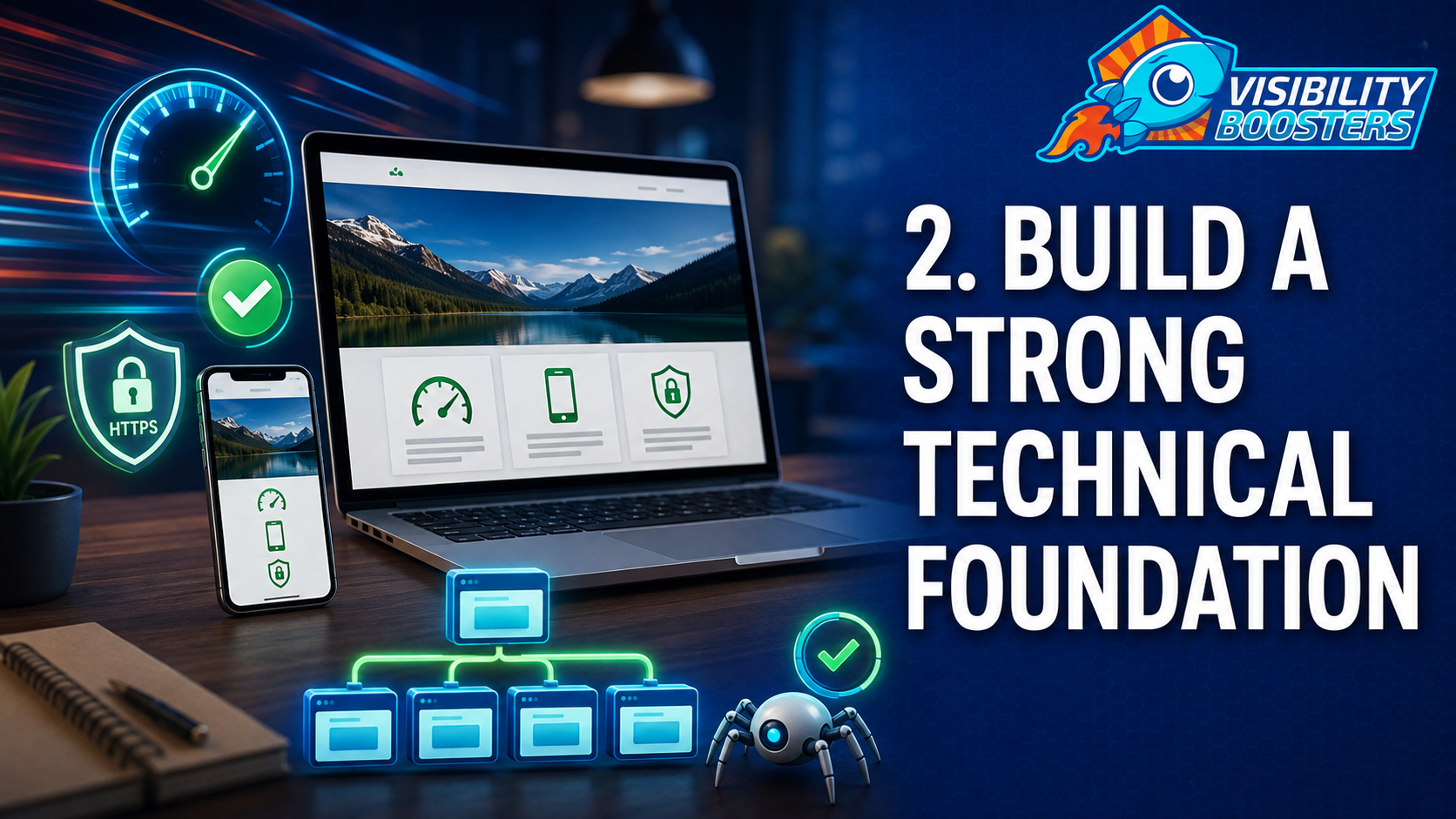
Even excellent content can struggle if Google cannot reliably crawl, index or understand the site. Technical SEO removes those barriers and creates a stable foundation for everything that follows
Make sure important pages are indexable and not accidentally blocked by robots.txt or no index settings.
Use a clean XML sitemap and submit it through Google Search Console.
Choose one preferred version of duplicate URLs with redirects or canonical tags.
Use HTTPS, fix broken links and remove redirect chains that slow users and crawlers.
Make the site mobile-friendly and keep page layouts stable while they load.
Compress oversized images, reduce unnecessary scripts and improve server response time.
Use clear navigation so important pages are reachable through internal links.
Google recommends checking whether its crawler can see a page in much the same way a user does. If critical CSS, JavaScript, images or content are hidden from crawling, the page may be harder to understand. Search Console’s URL Inspection tool is one of the best places to confirm what Google can access and whether a page has been indexed.
3. Create Focused Service and Location Pages
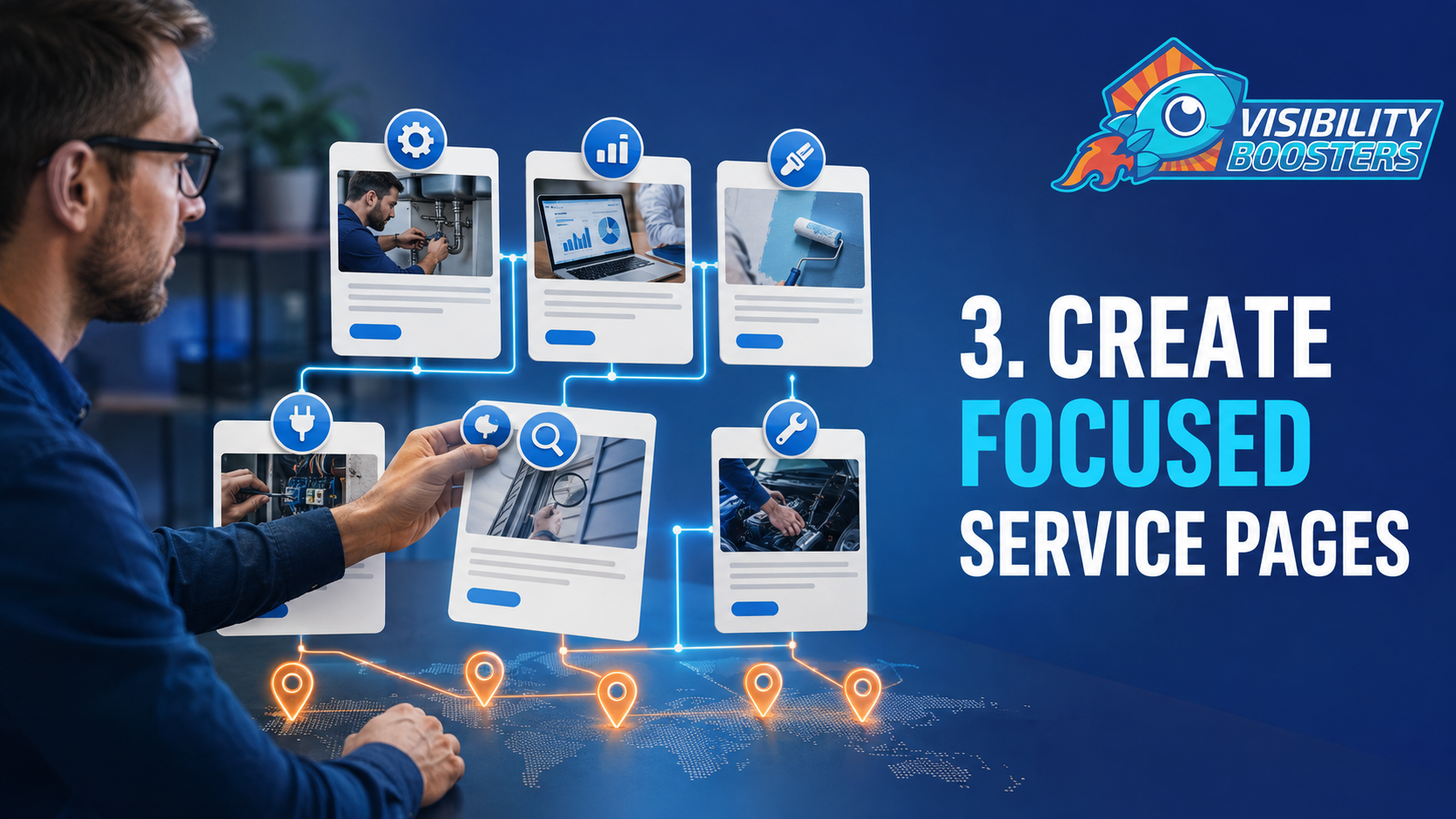
A single general services page rarely gives Google—or a customer—enough detail to understand every offering. Important services deserve focused pages that clearly explain what the service is, who it helps, where it is available and why your company is qualified to provide it.
A strong service page typically includes a clear headline, a plain-language explanation, common problems solved, benefits, process, proof, service areas, frequently asked questions and a specific call to action. Where appropriate, add original photos, project examples, testimonials and team expertise.
Make local pages genuinely local
If you serve several cities, avoid copying one page and swapping the city name. Useful location pages should reflect the market: local neighbourhoods, common customer needs, industries, climate, regulations, service logistics, case examples and other details that make the page valuable to someone in that area.
Example: A Niagara SEO page should demonstrate knowledge of Niagara’s communities and customer market—not simply repeat a generic Ontario page with “Niagara” inserted throughout.
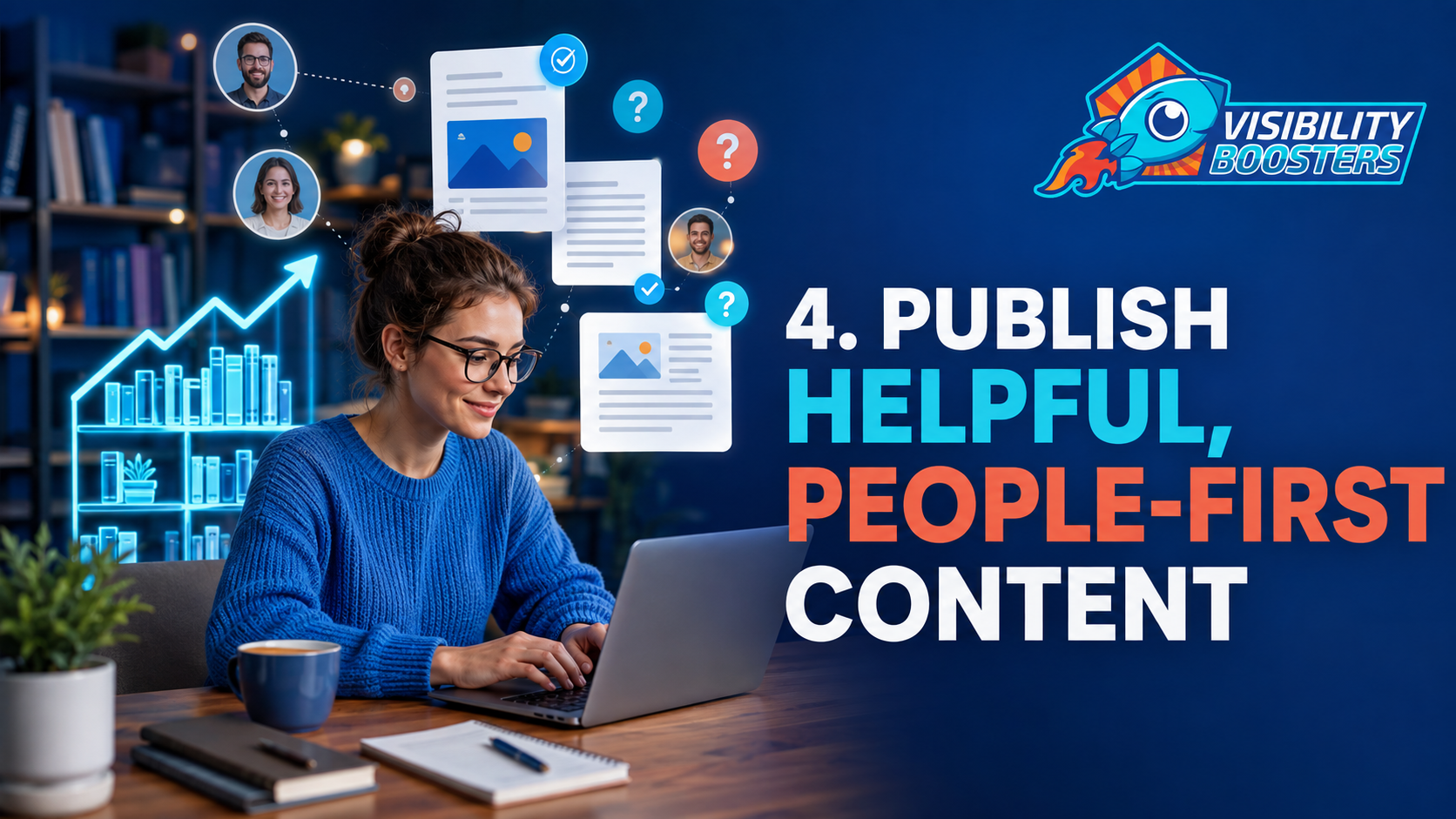
4. Publish Helpful, People-First Content
Google says compelling and useful content is likely to influence search visibility more than many other individual improvements. That does not mean publishing as many posts as possible. It means creating original content that fully helps the intended reader.
Start with the questions your team hears every week. What do customers misunderstand? What makes them hesitate? What do they compare? What should they know before buying? Those questions can become articles, guides, FAQs, videos and service-page sections that attract relevant searches and build confidence.
Answer the question early, then add useful depth and examples.
Write from real experience and include details competitors cannot easily copy.
Use clear sections, natural language and descriptive headings.
Connect related articles into topic clusters and link them to the right services.
Review older content and update facts, examples, links and calls to action.
Avoid filler written only to hit an arbitrary word count.
One well-researched guide that becomes the best answer for a customer can be more valuable than ten shallow posts. Consistency matters, but quality and usefulness come first.
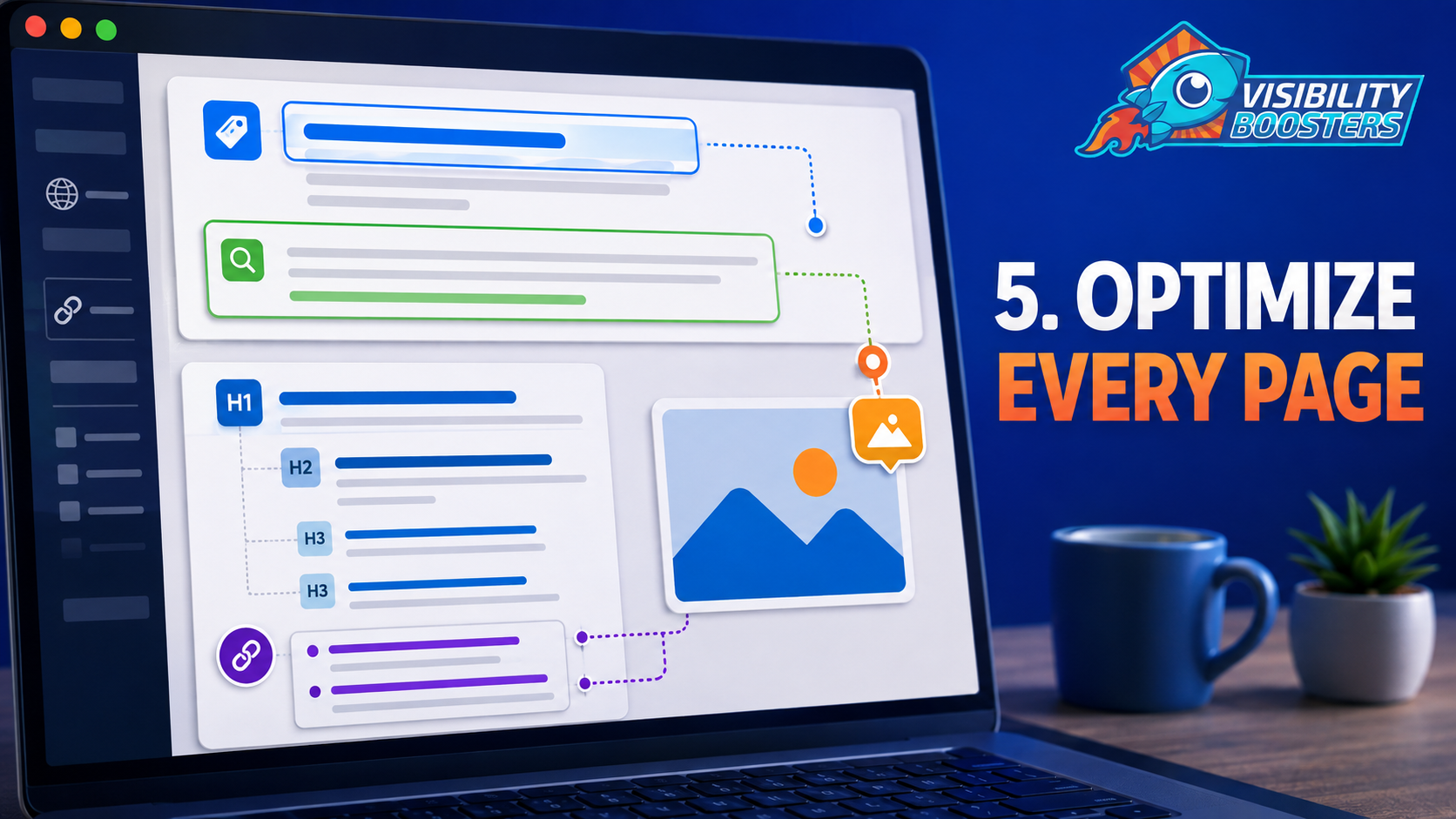
5. Optimize Every Important Page
On-page SEO gives search engines and people clear signals about a page. Each important URL should have a unique purpose and a complete set of supporting elements.
Write a unique, accurate title that clearly describes the page and includes the business or location when useful.
Create a concise meta description that explains the value of the page and encourages the right person to click.
Use one clear main heading and descriptive subheadings that make the page easy to scan.
Use a short, readable URL instead of strings of numbers or unnecessary parameters.
Add descriptive internal links with anchor text that explains the destination.
Place sharp, relevant images near the text they support and write useful alt text.
Add appropriate structured data when the page qualifies, such as LocalBusiness, Service, Article or Breadcrumb markup.
Do not force the same keyword into every sentence. Google’s language systems can understand related wording, and keyword stuffing can make content unpleasant to read. Use the phrases customers naturally use, but keep the page written for humans.
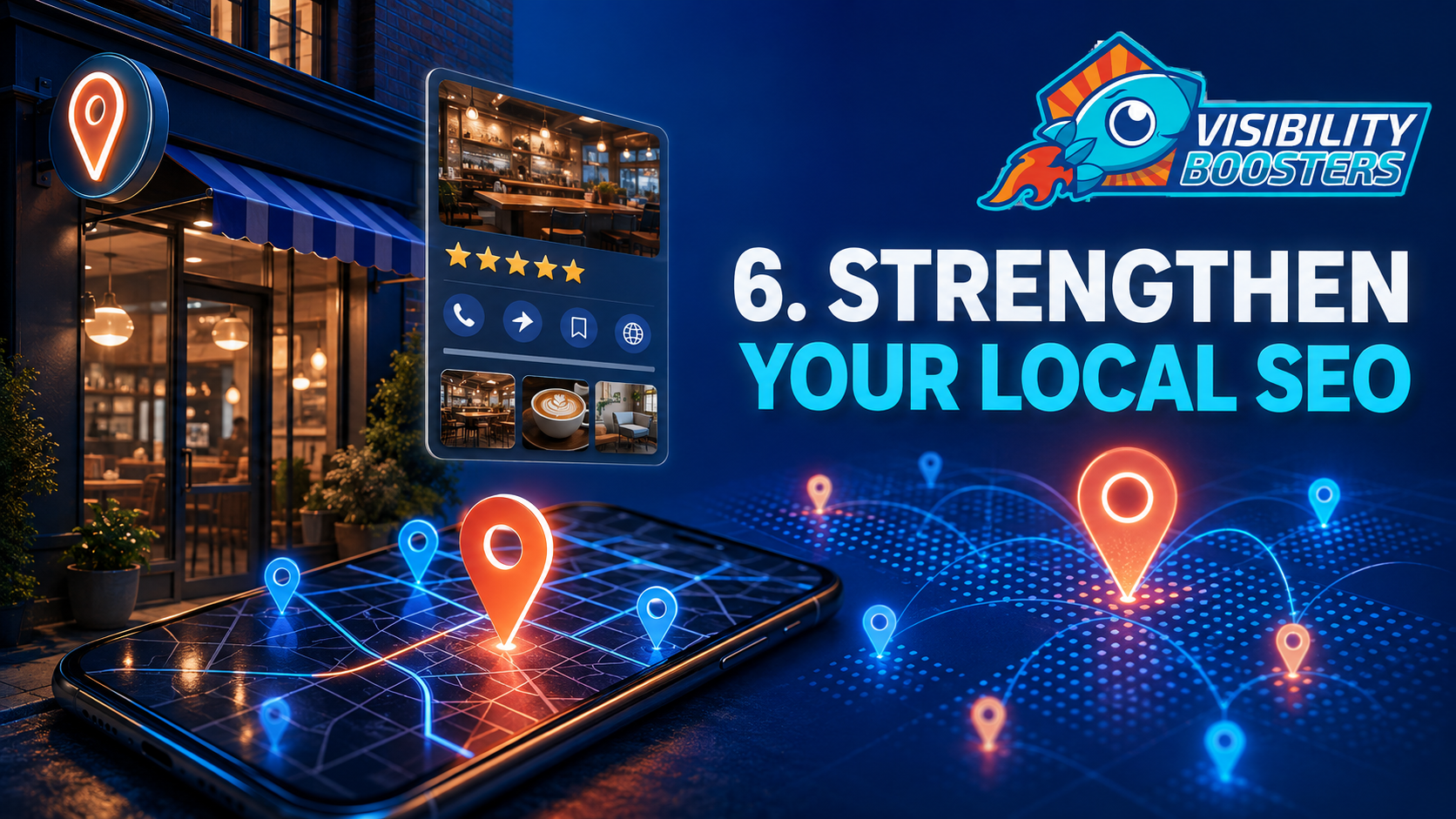
6. Strengthen Your Local SEO
For a local business, the website and Google Business Profile should reinforce each other. Google explains that local results are mainly influenced by relevance, distance and prominence. You cannot control a searcher’s distance, but you can improve how clearly your business matches the search and how established it appears
Claim and verify the correct Google Business Profile.
Keep the business name, address, phone number, hours, categories and website accurate.
Add complete service descriptions, service areas, attributes, photos and videos.
Ask real customers for reviews and respond professionally to every review.
Keep key business information consistent across trusted directories and industry sites.
Create locally useful website content and link the profile to the most relevant page.
Local visibility is strongest when your website, profile, reviews, directories and community presence tell the same accurate story. A polished profile cannot compensate for a thin or confusing website, and a strong website should not be disconnected from the profile customers see first.

7. Earn Links, Mentions and Real Authority
Links from other websites help Google discover pages and understand how the web is connected. More importantly, genuine mentions can send referral traffic and show that your business is known beyond its own website.
The safest link-building strategy is to do work worth referencing and build real relationships. That may include local sponsorships, industry associations, supplier or partner pages, expert commentary, original research, community initiatives, useful tools, case studies and newsworthy company updates
Publish original resources that solve a real industry problem.
Ask legitimate partners and associations to link to the most relevant page.
Contribute expert insights to reputable publications and podcasts.
Create local partnerships that produce both visibility and community value.
Reclaim accurate unlinked brand mentions where a link would genuinely help readers.
Avoid buying bulk links, joining manipulative link schemes or publishing low-quality guest posts only for SEO. A smaller number of relevant, credibe links is far more useful than a large volume of suspicious ones.

8. Improve User Experience and Conversions
Ranking is only valuable when the page satisfies the visitor. If someone lands on your site and cannot quickly understand what you do, where you work or what to do next, traffic will not become revenue
Make the main service and service area obvious within the first screen.
Use readable type, strong contrast, clear navigation and mobile-friendly spacing.
Place click-to-call, booking and quote actions where visitors naturally need them.
Show real proof through reviews, credentials, team photos, projects and guarantees you can support.
Answer cost, timing, process and eligibility questions that block decisions.
Track calls and form submissions so you know which pages produce qualified leads.
SEO and conversion optimization should work together. The best page is not merely the page that receives a click; it is the page that gives the right visitor enough clarity and confidence to take the next step.

9. Measure, Improve and Repeat
SEO is not a one-time project. Google notes that some changes can appear within hours while others may take weeks or months. Measure meaningful trends, allow enough time for changes to be evaluated and keep improving what the data reveals.
Search impressions: how often your pages appear for relevant queries.
Clicks and click-through rate: whether your search appearance earns attention.
Average position and query groups: directional visibility, not a single absolute score.
Indexed pages and crawl issues: whether technical barriers are limiting discovery.
Organic leads, calls, bookings and revenue: whether visibility is producing business value.
Landing-page engagement and conversion rate: whether visitors find the page useful and persuasive.
Use Google Search Console to identify queries that are gaining impressions but not enough clicks, pages sitting just outside stronger positions, indexing problems and content that has begun to decline. Combine that with analytics, call tracking and CRM data so decisions are based on outcomes rather than rankings alone.
Common SEO Mistakes That Hold Websites Back
Expecting immediate results or changing strategy every week.
Publishing duplicate location pages with only the city name changed.
Targeting broad, high-volume keywords that do not match the business goal.
Writing for search engines instead of answering the customer.
Ignoring mobile speed, technical errors or pages blocked from indexing.
Using the same title and meta description across many pages.
Buying low-quality backlinks or participating in link schemes.
Tracking rankings without tracking calls, forms, bookings or revenue.
Letting service information, hours and contact details become inconsistent online.
How Long Does It Take to Reach the Top of Google?
There is no universal timeline. A technically healthy site in a less competitive niche may see useful gains relatively quickly. A new site competing in a crowded market may need sustained work over many months. The current authority of the domain, quality of competitors, search demand, location, content depth, technical condition and consistency of execution all affect the pace.
A sensible early goal is to fix technical barriers, improve the pages closest to generating business and begin earning visibility across a wider group of relevant searches. Strong SEO compounds: better pages earn more engagement and links, which support broader visibility over time.
How Visibility Boosters Helps Businesses Rank Higher
Visibility Boosters helps businesses build the connected system required for sustainable search growth. That can include technical SEO, website design, service and location pages, blog content, Google Business Profile optimization, review generation, local marketing, conversion improvements, analytics and lead tracking.
Our approach is designed around business outcomes. We look at how customers search, what they need to see before contacting you and where your current website is losing visibility or opportunity. Then we create a practical roadmap that connects ranking work with stronger trust, faster lead response and measurable growth.
SEO and online ranking strategy
Website design and conversion optimization
Service, location and blog content
Google Business Profile optimization
Reputation and review systems
CRM, lead tracking and automated follow-up
AI receptionist and business automation
Ready to improve your visibility? Book a strategy call with Visibility Boosters at https://book.visibilityboosters.com/ or call 289-203-7334.
Final Thoughts
Getting to the top of Google is not about finding a shortcut. It is about becoming the most useful, relevant and credible option for the searches that matter to your customers.
Start with intent. Fix the technical foundation. Build focused service and location pages. Publish genuinely helpful content. Optimize every page. Strengthen local signals. Earn real authority. Make the website easy to use. Then measure what happens and keep improving.
When those pieces work together, your website becomes easier for Google to understand, easier for customers to trust and far more capable of turning online visibility into consistent business growth.